The research included thoughts and examples from councillors and officers across 32 local authorities who found councils increasingly framing projects around warmer buildings, lower energy bills, energy security, healthier places, nature recovery and community benefit. It suggests that these wider benefits are becoming central to how councils build support for projects, with many participants arguing that outcomes such as warm homes, lower bills and healthier communities resonate more strongly than net zero messaging alone. Net zero remains a strategic driver, but the public language is becoming more relatable and less politically contested.
This shift sits alongside a more realistic view of targets. The research describes this as a sector-wide recalibration, with many authorities moving from fixed deadlines towards a “best achievable” approach that reflects funding, infrastructure and delivery constraints. But delivery has not stopped; the emphasis is moving from headline dates to investable, deliverable projects.
More importantly, participants, including officers and cabinet members (or equivalent) across leadership, environment, energy, and climate roles, said that without significant investment in skills, capacity, and organisational integration, the pace and scale of delivery will remain limited.
That matters in a difficult financial environment. Grant funding is uncertain, budgets remain under pressure and the easier early measures have often been completed. Councils are now facing more complex programmes, including heat decarbonisation, retrofit, fleet transition, grid constraints and long-term infrastructure planning. Projects therefore need to work financially as well as environmentally. In fact, funding uncertainty was identified in the research as the most widespread constraint on delivery, influencing not only the pace of decarbonisation but also the types of projects councils choose to prioritise.
Solar is a strong example of where those priorities come together. As the report concludes, this area has emerged as a central component of local energy strategies because it aligns with today’s financial and political realities.
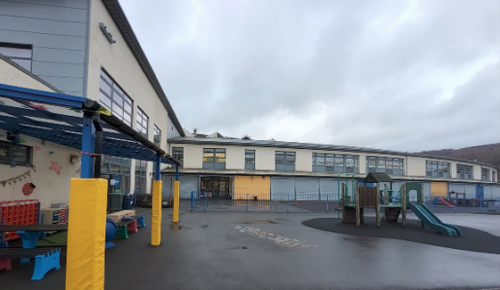
The research identifies it as a core “big ticket” measure: practical, visible and often well suited to schools, leisure centres, depots and community buildings because it is tangible, relatively low disruption and usually supported by a strong business case.
Viewed as an investment, solar can effectively fix a significant portion of a site’s electricity cost at around 7p/kWh over the asset life (25 years typically). That certainty helps public bodies manage price volatility, reduce grid reliance and release savings for frontline services or further decarbonisation.
However, the research highlights that wider constraints, including unsuitable roofs, heritage constraints, landlord and tenant issues, grid delays and local opposition to solar farms. But these challenges strengthen the case for good project development, procurement and advice.
Encouragingly, many of the themes emerging from the report can already be seen in delivery activity across the public sector estate and LASER’s recent experience strongly reflects this:
- Solar activity has ramped up, with councils moving from broad ambition to estate-wide delivery. LASER is supporting feasibility work, specifications, procurement through our solar framework and project management of installers.
- Heat decarbonisation continues through PSDS-funded projects, often via LASER frameworks, but the closure of grant rounds creates uncertainty and increases the need for financially robust schemes.
- Consultancy demand has shifted from high-level net zero plans to site-level action. LASER surveyors are carrying out energy audits across council, blue-light and wider public sector estates to identify measures that can be costed, prioritised and delivered.
The Local Power Plan and GB Energy’s focus on community and public sector energy may signal a new phase of government support. As ever, the detail will determine whether this becomes a transformational flow of funding or another limited intervention.
For councils, schools and wider public sector organisations, the lesson is clear: net zero language may be evolving, and targets may be more flexible, but the need to act remains. The strongest projects combine carbon reduction with financial resilience, operational confidence and local benefit and that conclusion closely reflects the central message of the research report: energy transition remains a priority for local government, but success increasingly depends on delivering projects that are practical, investable and aligned with local needs.
Solar does exactly that. It is a climate measure, an energy cost management tool and an invest-to-save opportunity. LASER helps organisations turn that opportunity into deliverable projects, from business case and procurement through to completion.